



























Avalanche beacons


Avalanche beacons: essential for safety in off-piste terrain
Off-piste skiing and snowboarding is spectacular, challenging and offers a freedom you don’t often experience on groomed runs. But with that adventure comes increased risk, and avalanches are one of the biggest hazards. That’s why an avalanche beacon – also called an avalanche transceiver – is an indispensable part of your safety equipment when you go outside the marked pistes. In this text we explain what an avalanche beacon is, how the device works, why it’s so important and what to watch for when choosing a good model.
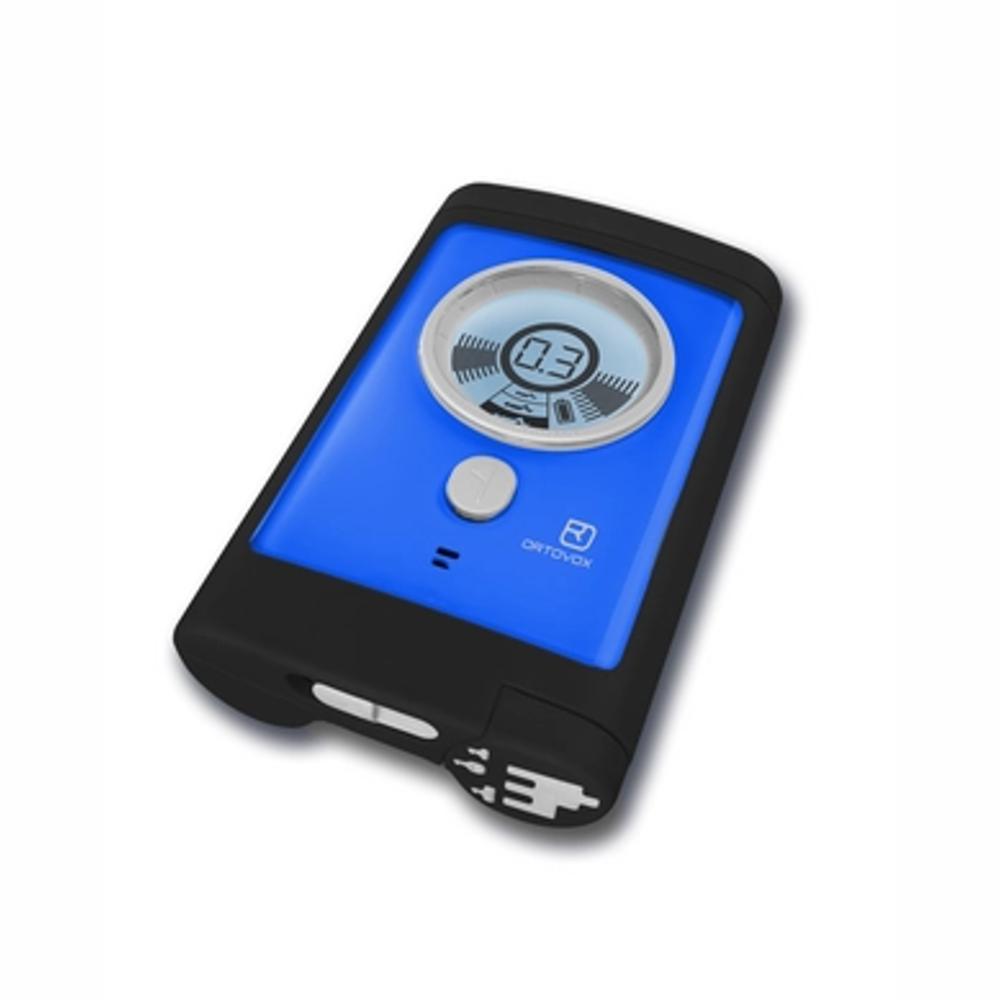
What is an avalanche beacon?
An avalanche beacon is an electronic device used to locate people who have been buried by an avalanche. The device works with radio signals and can both transmit and receive. If you go off-piste with a group and an avalanche occurs where someone becomes buried, the other group members can switch their beacons to ‘search mode’. The beacon will then receive the signal from the buried person and help determine his or her exact location.
The official term is avalanche transceiver, which refers to the fact that the device both transmits and receives. Each group member should carry one, preferably close to the body and under clothing, so the device is not lost during a fall.
How does an avalanche beacon work?
An avalanche beacon has two modes: transmit mode and search mode.
- In transmit mode (the default setting while snowboarding or skiing) the beacon continuously emits a radio signal on a fixed frequency of 457 kHz. This signal is standardized so that all modern avalanche beacons – regardless of brand – are compatible with each other.
- In search mode the beacon is used to receive the signal of another beacon. Once the signal is detected, the beacon’s display shows the distance to the victim and the direction you should move.
Modern beacons also provide visual and auditory cues so you can search faster and more accurately. With multiple victims, some beacons can distinguish between signals and allow you to mark specific victims.
Why is an avalanche beacon important?
The survival chance of someone swept away by an avalanche drops rapidly as time passes. Statistics show that the chance of survival within the first 15 minutes is still around 90%. After 30 minutes that percentage falls to about 30%. Acting quickly is literally a matter of life and death.
Because professional rescue usually cannot arrive in time, it is crucial that group members can rescue each other. An avalanche beacon allows you to quickly determine a victim’s location and begin digging, together with your shovel and probe. Without a beacon it is virtually impossible to find someone in time in a deep layer of snow.
What else do you need besides a beacon?
A beacon alone is not enough. A complete avalanche safety set consists of three parts:
- Avalanche beacon
To find the victim. - Probe
An extendable measuring pole with which you probe the snow to determine the victim’s exact position and depth. - Shovel
Once you know the location you start digging. Snow can be surprisingly hard after an avalanche, so a sturdy metal shovel is essential.
These three elements together form the basic equipment for anyone going off-piste. In addition, an avalanche backpack with airbag is a valuable addition to increase your chances of survival.
Different types and features of avalanche beacons
There are various models on the market, with a range of features and price points. Most modern beacons have three antennas. This ensures more accurate determination of distance and direction, even if the victim is at an odd angle.
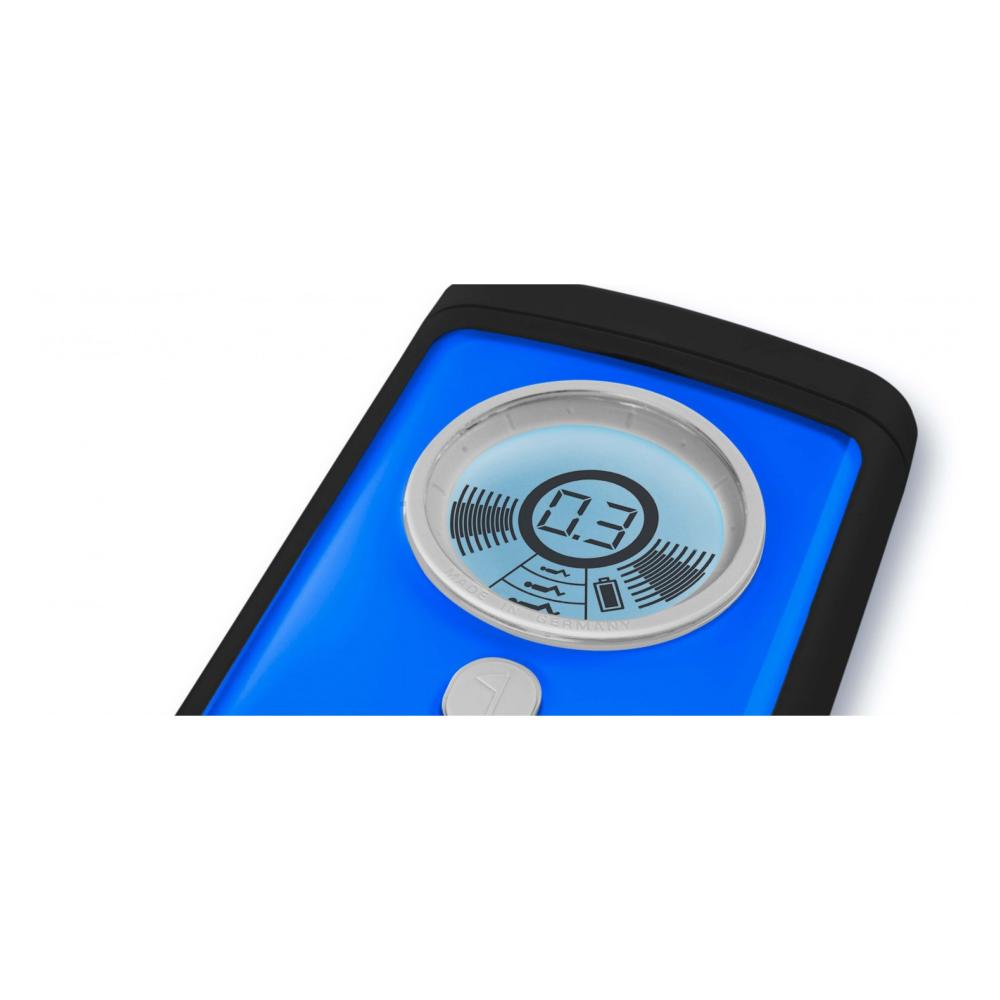
Important features to watch for:
Multiple victim recognition
In a group multiple people can be buried at the same time. An advanced beacon can distinguish multiple signals and help you set priorities.
Mark function
This lets you ‘mark’ a found signal so you can continue searching for other victims without being distracted by the previously found signal.
Automatic revert
Some beacons automatically switch back to transmit mode if no movement is detected for a longer period. This can be vital if the searcher themself gets caught in a secondary avalanche.
Updatable software
Some models can be updated via an app or computer so you always have the latest features.
How to use an avalanche beacon correctly?
Buying a beacon and clipping it around your waist is not enough. Practice is crucial. In a stressful situation you must know how to act quickly.
Some tips:
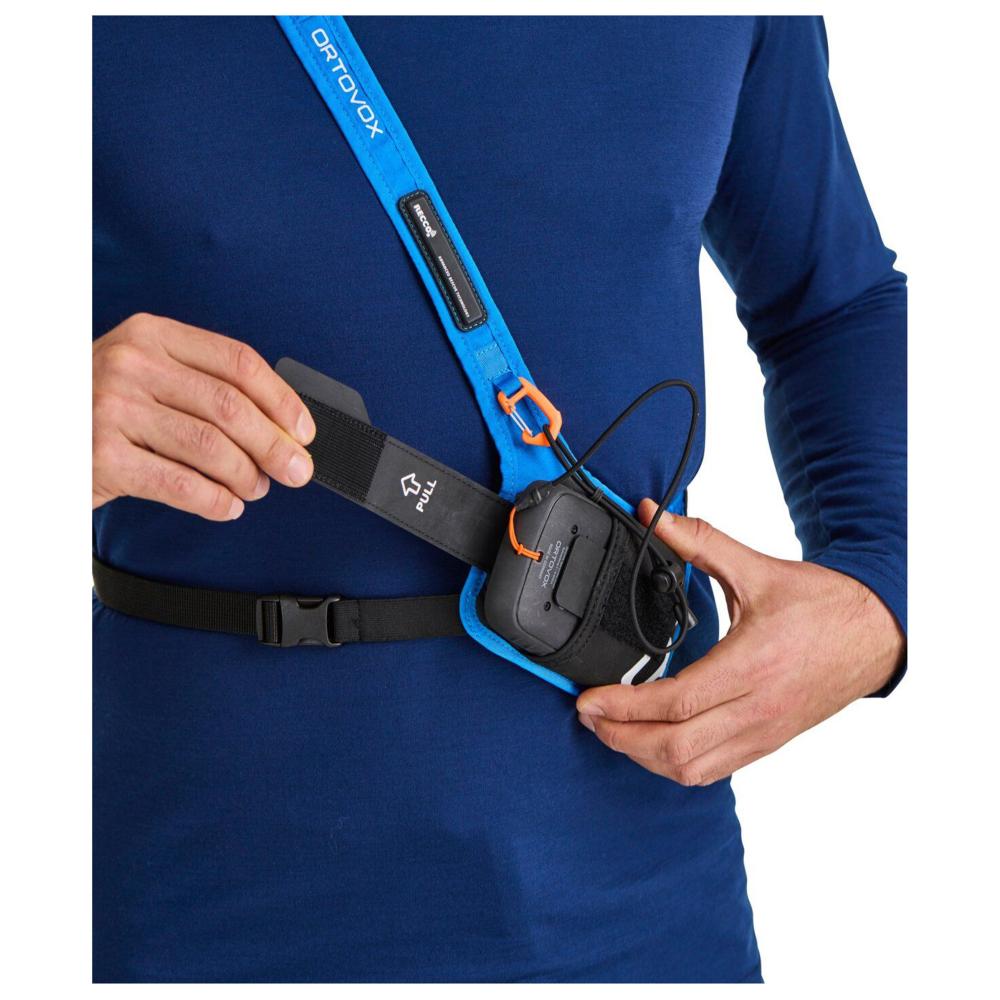
Wear the beacon under your jacket
Use the supplied carrying harness or put it in an inner pocket. That way it won’t be lost in a fall.
Check before you leave
Always do a group check. Make sure all beacons are in transmit mode and functioning.
Practice regularly
Take an avalanche course where you learn to search with a beacon, probe and shovel. Simulations in realistic conditions are invaluable.
Know your equipment
Each model works slightly differently. Make sure you understand the model you own well.
How to choose the right avalanche beacon?
When choosing an avalanche beacon it is important to consider your own experience and the type of terrain you ride in. For beginners a simple model without too many features is often best. Advanced users and guides benefit from a model with multiple victim recognition and mark function.
Other considerations:
Ease of use
Is the display clear? Is the operation intuitive?
Battery life
Choose a beacon with long runtime, preferably using standard AA or AAA batteries.
Reliability
Go for reputable brands such as Ortovox, Mammut, BCA (Backcountry Access), Pieps or Arva.
Maintenance and storage
An avalanche beacon needs little maintenance, but checks are essential. Replace the batteries regularly, ideally before each season. Do not use rechargeable batteries, as they perform worse in the cold.
After use store the beacon in a dry, dust-free place. Avoid extreme heat or cold. Check the device for physical damage and test it regularly, even outside the season.
Conclusion: a small investment for life-saving assurance
An avalanche beacon is a small device with big impact. For anyone who ventures off-piste, this is an essential tool that can literally save lives. In combination with a probe and shovel it forms the basis of your off-piste safety gear. But the right equipment alone is not enough. Knowledge, preparation and regular practice are at least as important.
Invest in a reliable model, make sure you can use it, and take responsibility for yourself and your group. Because in the off-piste world every second counts – and your beacon can make the difference.