

















Goggles for normal vision


Goggles for normal visibility: comfortable and clear vision during your winter sport
When skiing or snowboarding, good goggles are an indispensable part of your gear. Especially in normal weather conditions — when the light is neither extremely bright nor very diffuse — goggles for normal visibility offer the right balance between protection, vision and comfort. In this text you will read what to look for when choosing goggles for standard light conditions, which lens colors and technologies are suitable, and which features make these goggles stand out.
What are normal visibility conditions on the slopes
By normal visibility we mean conditions where the weather is fairly stable. The sun may shine, but not intensely. There is often light cloud cover or filtered sunlight. In such situations you don’t need an extremely light or dark lens, but goggles that protect your eyes from UV radiation while providing a clear, natural view. Goggles for normal visibility are then the best choice for a relaxed day on the mountain.
Which lens color is suitable for average light
The color of the lens plays an important role in how you perceive your surroundings. For average light conditions, soft, neutral tints are often most suitable. Think of light brown, gray, pink or copper colors. These lenses provide sufficient contrast enhancement without making the view too dark.
It is important to pay attention to the VLT value, i.e. how much light the lens transmits. For normal visibility this value ideally lies between 20% and 40%. This way you retain a good view of the surface and your eyes are not overly strained. Lenses in this range are perfectly tuned to conditions that are neither very sunny nor overcast.
Choose fixed or interchangeable lenses
For goggles for normal visibility you can choose between models with a fixed lens or goggles where you can replace the lens. A fixed lens is fine if you mainly sport under stable conditions and do not need variation. These goggles are often somewhat cheaper and simpler to use.
Those who want more flexibility can choose goggles with interchangeable lenses. This allows you to easily switch to a lighter or darker lens if the weather suddenly changes. Models with magnetic or click systems make swapping easy and quick, even with gloves on.
Different lens shapes and their effect on vision
The shape of the lens affects the field of view and viewing comfort. You can choose cylindrical lenses, which are curved horizontally, and spherical lenses, which are curved both horizontally and vertically. Cylindrical lenses give a flatter image and are often more affordable. They are perfectly suitable for recreational use in average weather conditions.
Spherical lenses offer a wider and more natural view, which is pleasant for those who spend a lot of time on the slopes or want more surrounding vision. This shape reduces optical distortion and provides better depth perception, which contributes to your reaction ability.
Pay attention to fit and wearing comfort
Besides the lens, the fit of the goggles also plays a major role. The goggles should fit well to your face without causing pressure points. A sturdy, adjustable headband helps keep the goggles in place, especially when wearing a helmet.
The inside of the goggles is equipped with foam layers that provide comfort and insulation. The more foam layers, the better the fit adapts to your face. This prevents cold or snow from entering and ensures the goggles remain comfortable even after hours of wear.

Goggles for normal visibility with ventilation and anti-fog protection
Condensation on your lens can significantly impair your vision, even in normal visibility. That is why many goggles feature a ventilation system that helps regulate airflow. Vents at the top and bottom of the goggles provide fresh air intake, which prevents fogging.
Additionally, a special anti-fog coating is applied to the inside of the lens. This layer prevents moisture from adhering to the surface. Touch the inside of the lens as little as possible and always let your goggles dry thoroughly after use to preserve the effectiveness of the coating.
UV protection remains important
Even when it is not extremely sunny, UV protection remains important. At high altitude, the sun’s radiation is stronger, and UV rays also penetrate on cloudy days. Goggles for normal visibility should therefore provide 100% UV protection (both UVA and UVB). This prevents eye fatigue, watery eyes or even permanent damage.
Many models also offer protection against glare from the sun on the snow, which can be bothersome even in average light conditions.
Special for glasses wearers: OTG models
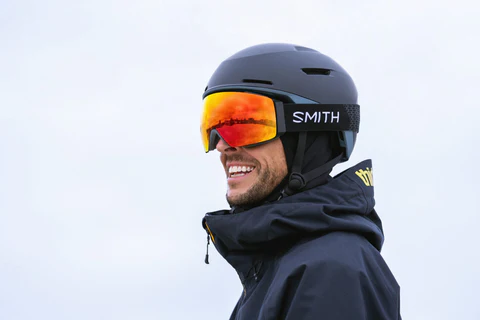
For those who wear glasses, there are special OTG-goggles available. These “over-the-glasses” models are designed with extra room on the sides so that your own glasses comfortably fit under the goggle. They usually also have cutouts in the foam to avoid pressure on the eyeglass temples.
Some brands also offer goggles with built-in prescription lenses or optional inserts, which is a good solution if you prefer not to wear glasses under your goggles.
Choose a style that suits you
Goggles come in countless designs, from sleek and minimalist to colorful and striking. You can choose from different frame colors, lens colors and finishes such as mirror coating. Although style is secondary to function, goggles that you feel good in also give you more confidence on the slopes.
For normal visibility, lightly tinted or subtly mirrored lenses are popular. They offer a balance between appearance and functionality.
Well-known brands and price ranges
There are many brands that offer quality goggles for normal visibility. Think of Oakley, Smith and Anon. Depending on the brand and the technology used, prices range between €50 and €300.
Entry-level models are often fine for recreational use and provide good basic protection. More advanced models have features such as photochromic lenses, extra ventilation or a wider field of view.
Maintenance and protection of your goggles for normal visibility
To enjoy your goggles for a long time, proper maintenance is important. Store your goggles in a protective pouch or hard case to prevent scratches. Let them dry properly after use and avoid cleaning the inside, especially when it is damp.
Always use a soft microfiber cloth to clean the outer lens and avoid aggressive cleaning agents. This keeps the lens clear and prolongs the life of the anti-fog coating.
Summary: versatile goggles for stable conditions
Goggles for normal visibility are ideal for days when weather conditions are mild and stable. They provide a clear and natural image, protect against UV radiation, and ensure comfort and safety on the slopes. By paying attention to lens color, fit, ventilation and any extra features you choose the goggles that best suit you and your use.
Whether you are just starting out or have years of experience, the right goggles make a big difference. With a well-chosen model you can enjoy every moment on the mountain, regardless of the light conditions.